News|Event date: March 31, 20175 min readSpecial Affairs Editor
Dr. Hussein Aref leads a team to save the Helwan Iron and Steel Plant.
"Technology does not die in drawers... and factories do not return from liquidation."
Ideas Do Not Die... But Factories Do
The story of the Russian delegation that visited Helwan on March 31, 2017, to save the Middle East’s largest factory—only for the furnaces to fall silent months later!
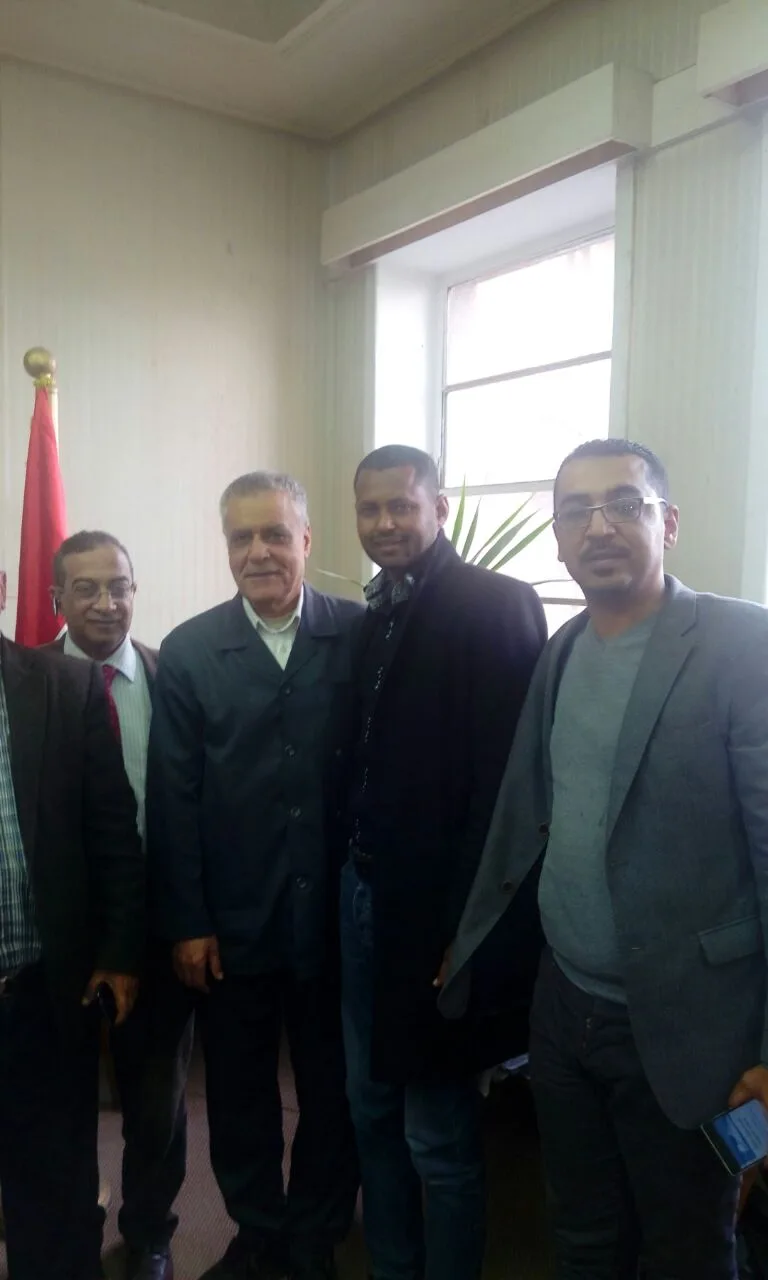
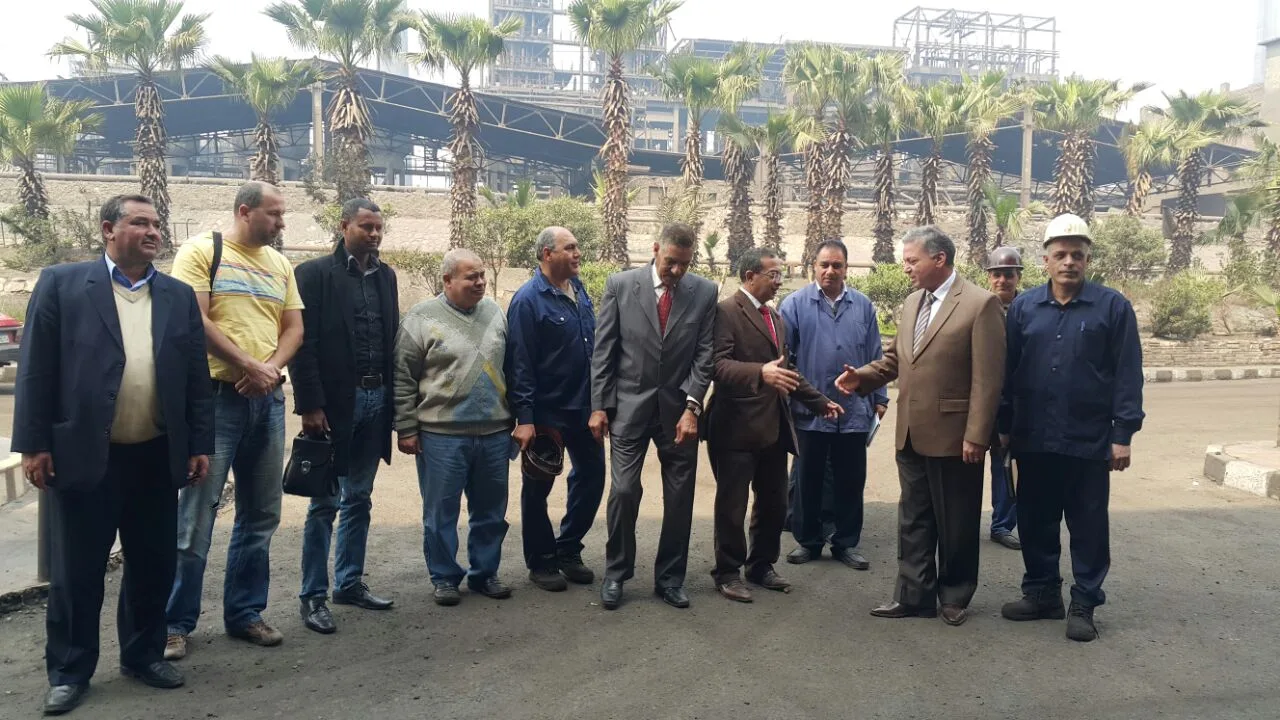
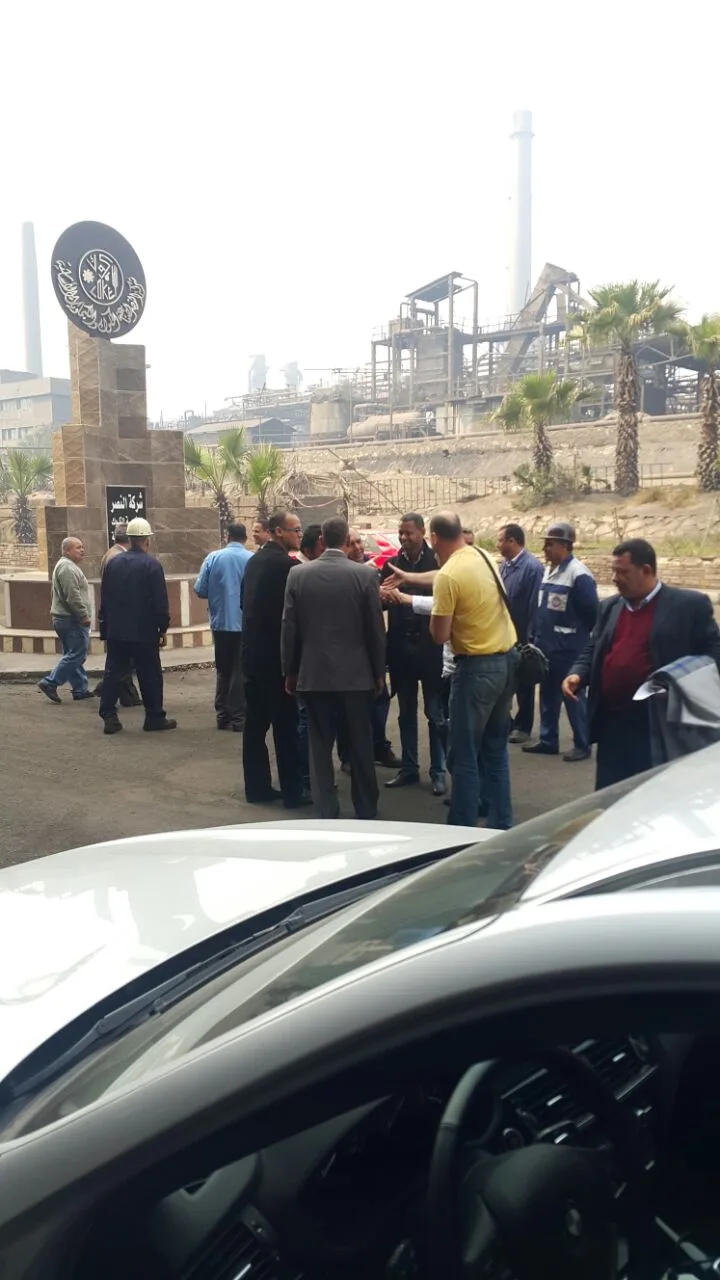
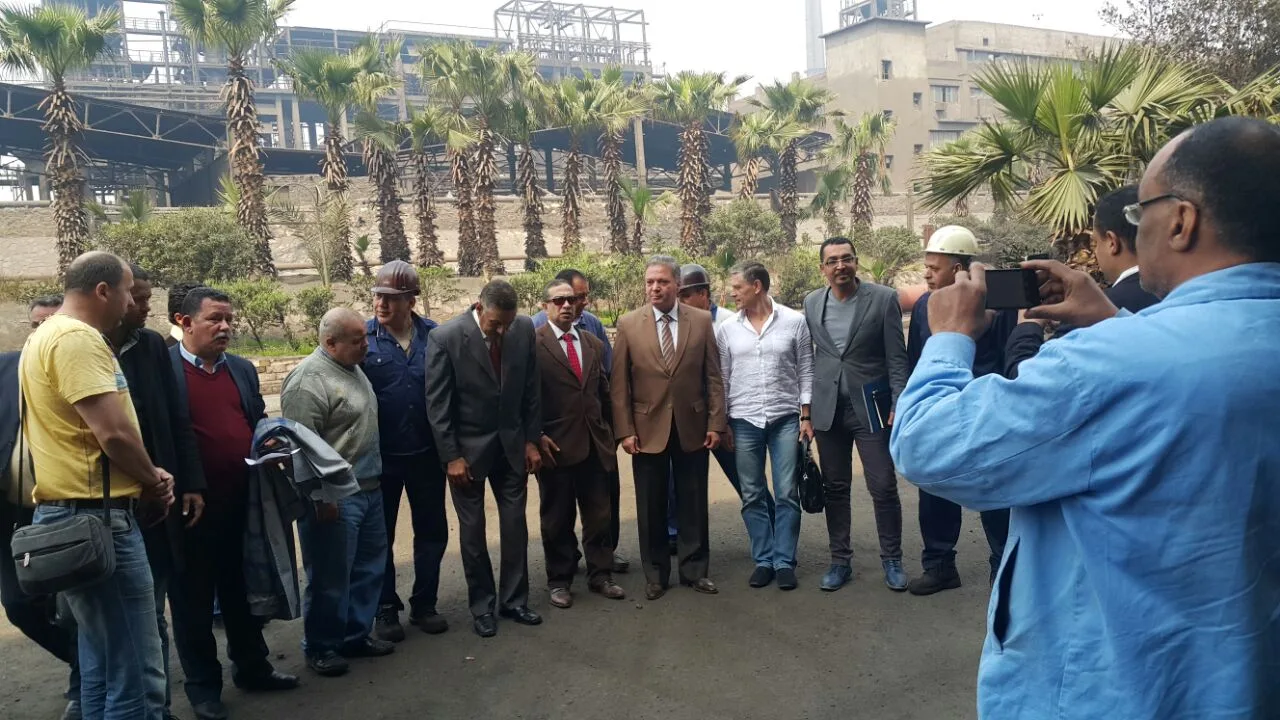
Following a field tour, Dr. Aref organized a visit for the Russian expert "Flavin"—the technology’s creator and the factory’s historic founder—to present a technical solution to officials at the Helwan University hall. This culminated in the delegation’s official visit to the factory, an event covered by *Youm7* on March 31, 2017.
"Russian Delegation Visits Iron and Steel Company to Discuss Joint Cooperation"
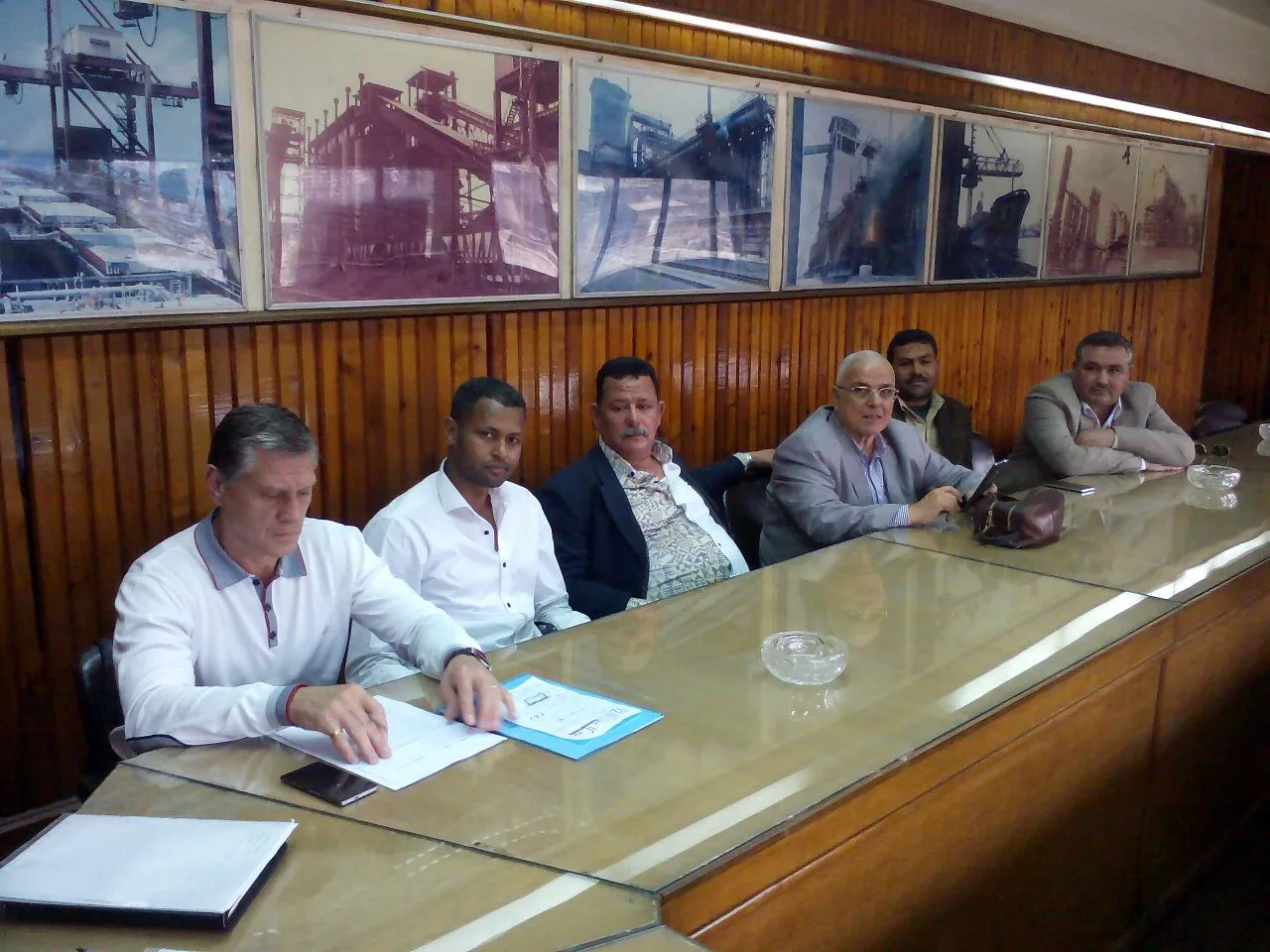
—With this brief headline, the *Youm7* news portal reported the events of March 31, 2017. On the surface, it appeared to be a routine story about international cooperation. Yet, behind that headline, a specialized Russian delegation sat within the company’s halls, holding a comprehensive dossier that would determine the fate of one of the Middle East’s industrial giants: the Helwan Iron and Steel Plant.
Aref and His Team... The Battle to Save the Plant
At the forefront of the Russian delegation sat Dr. Hussein Aref. He and his team had entered this battle with a single objective: to save the plant. Following a field visit and a technical assessment of the situation, he became convinced that the only solution capable of securing the plant's future was the Russian "Romelt" technology. He transformed the meeting from a mere protocol visit into a rigorous technical and economic discussion regarding the fate of Egypt’s iron ore and the workforce of this storied facility.
The role played went far beyond mere field tours; Following the field visit, Dr. Aref organized a visit for the Russian scientist Flavin—the developer of the "Romelt" technology and, according to project sources, the historical founder of the Helwan plant during the era of Soviet cooperation. The aim was to present the technical solution to officials at the university overseeing the project—Helwan University—in a symbolic meeting where decision-makers came face-to-face with the man whose name was linked to the very birth of the industry on the ground. This was followed by an official visit to the company on March 31, 2017, to document these efforts firsthand.
The Idea That Came First
"Romelt" was no stranger to the decision-making table at Helwan; Engineer Mohamed Saad Nagida—former Chairman of the Egyptian Iron and Steel Company (serving roughly from 2012 to 2017)—was the first to introduce this technology to Egyptian decision-makers. During that period, Russian companies and consultancy firms had put forward an ambitious proposal: to implement "Romelt" for the rehabilitation of the Helwan plant. The plan involved transforming millions of tons of accumulated furnace dust and iron waste—piled up over decades—into iron and economically valuable industrial products, thereby reducing reliance on costly natural gas and coke. The Russian delegation's visit in March 2017 coincided with the final months of that era.
What Is "Romelt"? This Russian technology, developed by the National University of Science and Technology (MISIS), is based on smelting and direct reduction. It simultaneously addresses two major challenges hindering traditional smelting in Egypt: it accepts low-grade ore and dust waste without the need for prior beneficiation (concentration) or sintering, and it completely eliminates the need for metallurgical coke, utilizing inexpensive thermal coal instead. This makes it particularly valuable for processing ore from the Bahariya Oasis; that ore contains alkali metal oxides (potassium and sodium) exceeding 1.5%. These oxides cause crust formation inside the blast furnace, degrade its refractory lining, and drive up coke costs—factors that have reduced production capacity to just 600,000 tons annually, falling significantly short of the plant's potential. In contrast, the Romelt process is entirely unaffected by these oxides, making it an indispensable option for processing Egyptian ore.
**Decisive Figures**
Processing 600,000 tons of Bahariya ore annually (with 1% ash and 22% volatile matter content) yields 300,000 tons of liquid pig iron, 150,000–160,000 tons of cast metal, and 320–330 million kWh of electricity, alongside granulated slag suitable as a raw material for cement production. The cost per ton of iron was projected at 1,000–1,100 kg of coal and 950–1,000 m³ of oxygen-enriched blast—without a single kilogram of coke.
Months after the visit... the furnaces fell silent.
That attempt never reached the implementation stage; funding difficulties and economic conditions caused the project to be shelved. In the months following the visit, the Helwan furnaces fell silent one by one, and the company was eventually slated for liquidation. Thus, the plant ceased to exist—taking with it jobs and accumulated expertise. All that remained were the memorandum, photos of the meeting, and the lecture delivered by Flavin at Helwan University—silent witnesses to an opportunity that had been on the verge of realization.
Ideas do not die... but factories do.
Here, the file shifts from a mere archive entry to a lesson in strategic decision-making.
In March 2017, the two sides of the story met at the same table: the Russian side, bearing the technology from its very source and intimately familiar with its details; and the Egyptian side, which—mere months later—would learn the price of squandering that opportunity.
From the site visit led by Dr. Hussein Aref through the plant’s facilities, to the Helwan University hall where the scientist Flavin presented the technical solution to officials, to the *Youm7* news report dated March 31, 2017, and finally to the furnaces that went cold one by one—the circle closed. It was not a matter of coincidence, but rather the inevitable result of the very logic of procrastination.
Today, this account enters the historical record, yet a question remains hanging before every future industry standing on the brink of a decision: Have we learned? This material remains for the historical record, while the question is posed to future industries: Have we learned? Technology has proven that it does not die simply by being relegated to a drawer—and the lesson is that factories do not return once they have been liquidated.